Guides / Which Muscles Is Your Workout Missing?
The muscles your workout is probably missing
Every "most neglected muscles" article gives you a list with no arithmetic behind it. For this one we ran a textbook five-lift routine through the coverage engine the app uses and measured what each of the 18 muscle groups received.
By Mike Zino, founder · Updated 2026-11-16
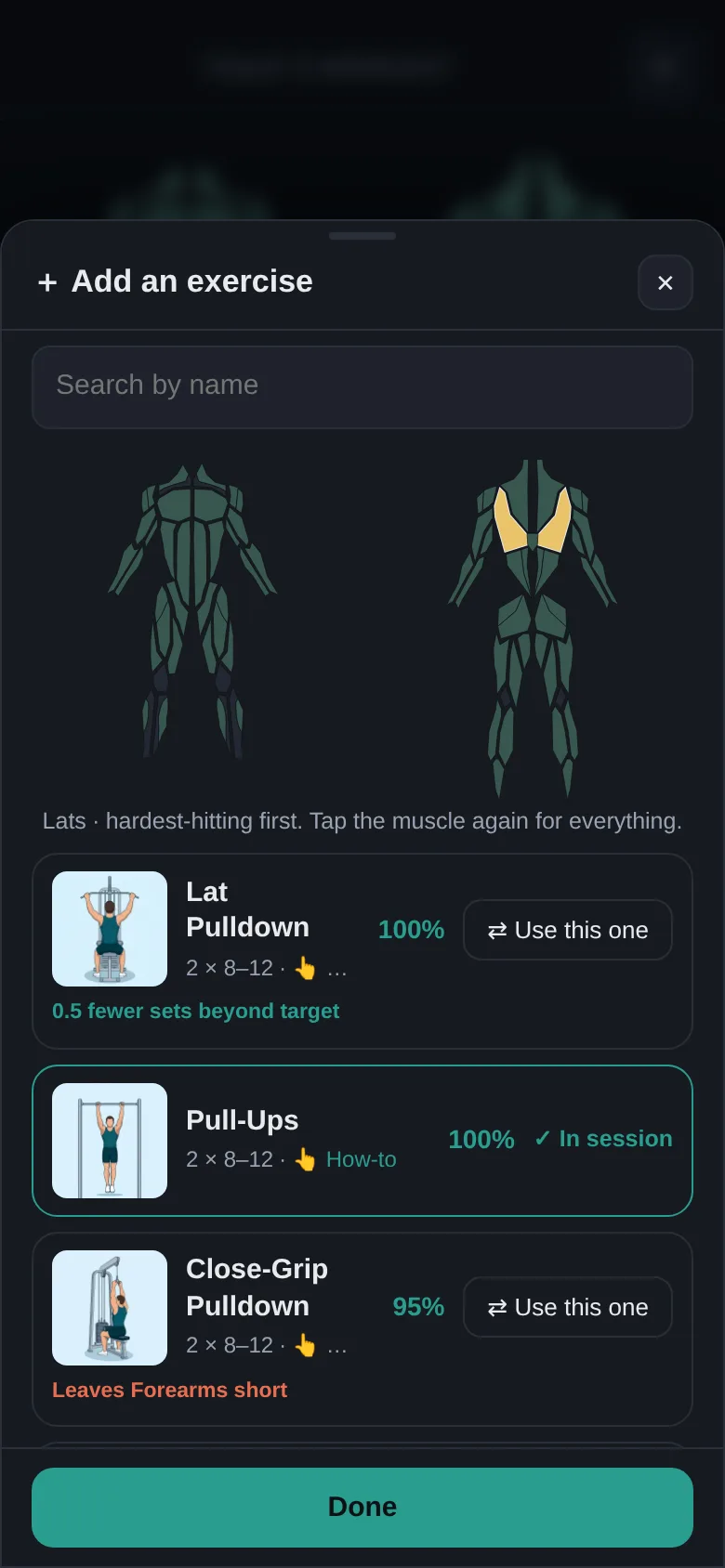
The test: five lifts, measured
Take the routine almost every beginner program recommends: back squat, Romanian deadlift, bench press, lat pulldown, seated row. Five compounds, about 18 minutes of work, and on paper it hits everything.
Measured against a full session's target for each of 18 groups, it reaches 10 of them. Here is what the other eight received:
| Muscle group | Share of one session's target |
|---|---|
| Side delts | 0% |
| Abductors (outer hip) | 0% |
| Calves | 10% |
| Obliques | 10% |
| Abs | 15% |
| Front delts | 40% |
| Triceps | 50% |
| Adductors (inner thigh) | 60% |
Two of them get zero: nothing in that session loads the side deltoid or the hip abductors at all. The other six are being touched rather than trained.
Why these six keep getting missed
Each of these is missed for a structural reason, not out of laziness.
They have no compound that covers them. Side delts are the clearest case. Bench and overhead presses both load the front delts; the lateral head only takes real load when the arm moves out to the side, and no multi-joint lift in a normal routine does that. Abductors (outer hip) have the same problem: the hip abducts in almost nothing you would call a main lift.
They get assisted, and assistance is mistaken for training. Abs and Obliques work hard bracing a squat, and that counts: an assisting muscle gets a real fraction of a set Pelland 2025. But it is only a fraction. Measured, bracing through five compounds gives the abs about 15% of what one session should.
They are boring, and the mirror does not ask for them. Calves and Adductors (inner thigh) are the classic examples. They are also the ones people feel surest they are "getting enough of", because those muscles work during other lifts. It is the same fraction-of-a-set error as above.
The fix is not more exercises
The instinct is to bolt on more work: curls, pushdowns, a couple of extra sets. We measured that too, and it does almost nothing. Adding a barbell curl to the six-lift version of this routine moved the on-target count by zero, and adding a triceps pushdown on top moved it by zero again, because the compounds had both arms covered already. The six groups still short were the six nobody adds.
The fix is different exercises, not more of them, and from the six-lift version there are five to add. Side delts need one lateral raise, the adductors one hip adduction movement and the abductors one hip abduction movement. Add one calf movement and one rotational core movement for the obliques and abs, and the routine is complete, because those are the specific holes.
Check your own routine
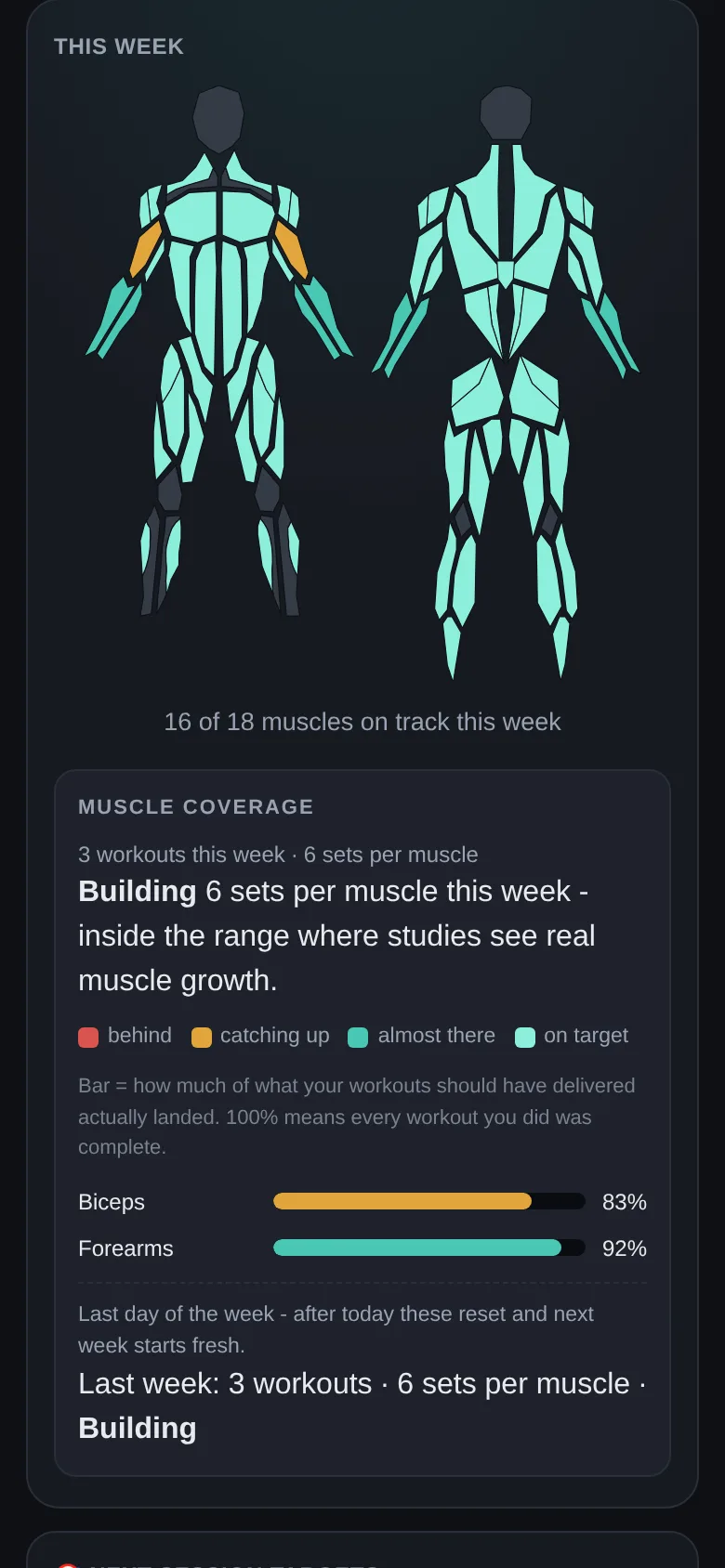
None of the above is a claim about your program. If you want the same measurement for what you actually do, the free coverage checker takes the movements you train, runs them through this engine and shows which groups fall short. It runs entirely in your browser: nothing is sent anywhere and there is no signup.
It uses the app's own two rules. A muscle counts as covered only at a full 100% of a session's target, with nothing rounded up to get there. And an assisting muscle contributes a fraction of that target, not all of it Pelland 2025, so an exercise that "sort of" trains something is scored as sort of training it.
The short version: routines miss the muscles with no compound to hide behind. Those are Side delts, Abductors (outer hip), Calves, Obliques, Adductors (inner thigh) and Abs (direct work). Five targeted movements close all of them.
Related guides
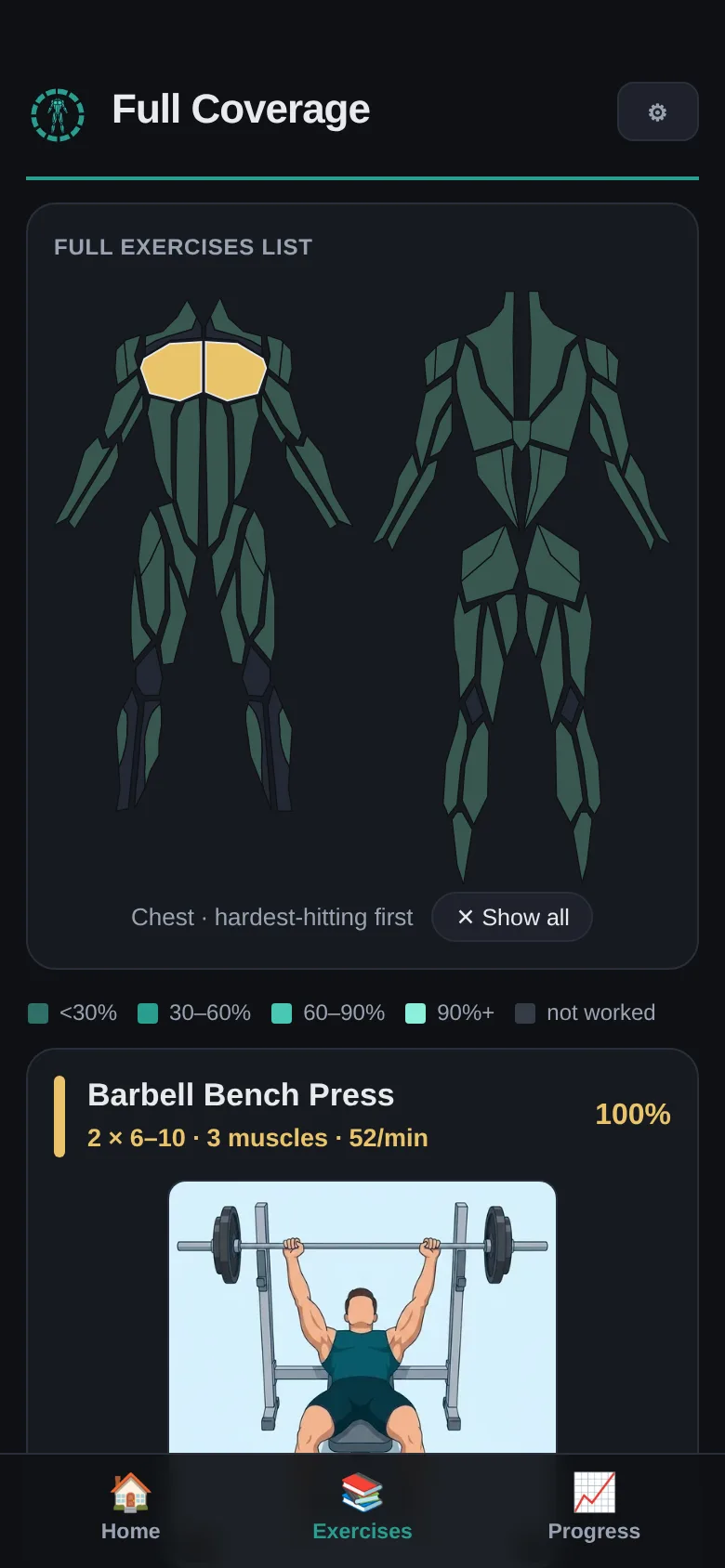
What Muscles Does Each Exercise Work? (With Percentages)
Most answers give you a list of muscle names. This one gives the share of a session each movement actually delivers, for all 18 groups.
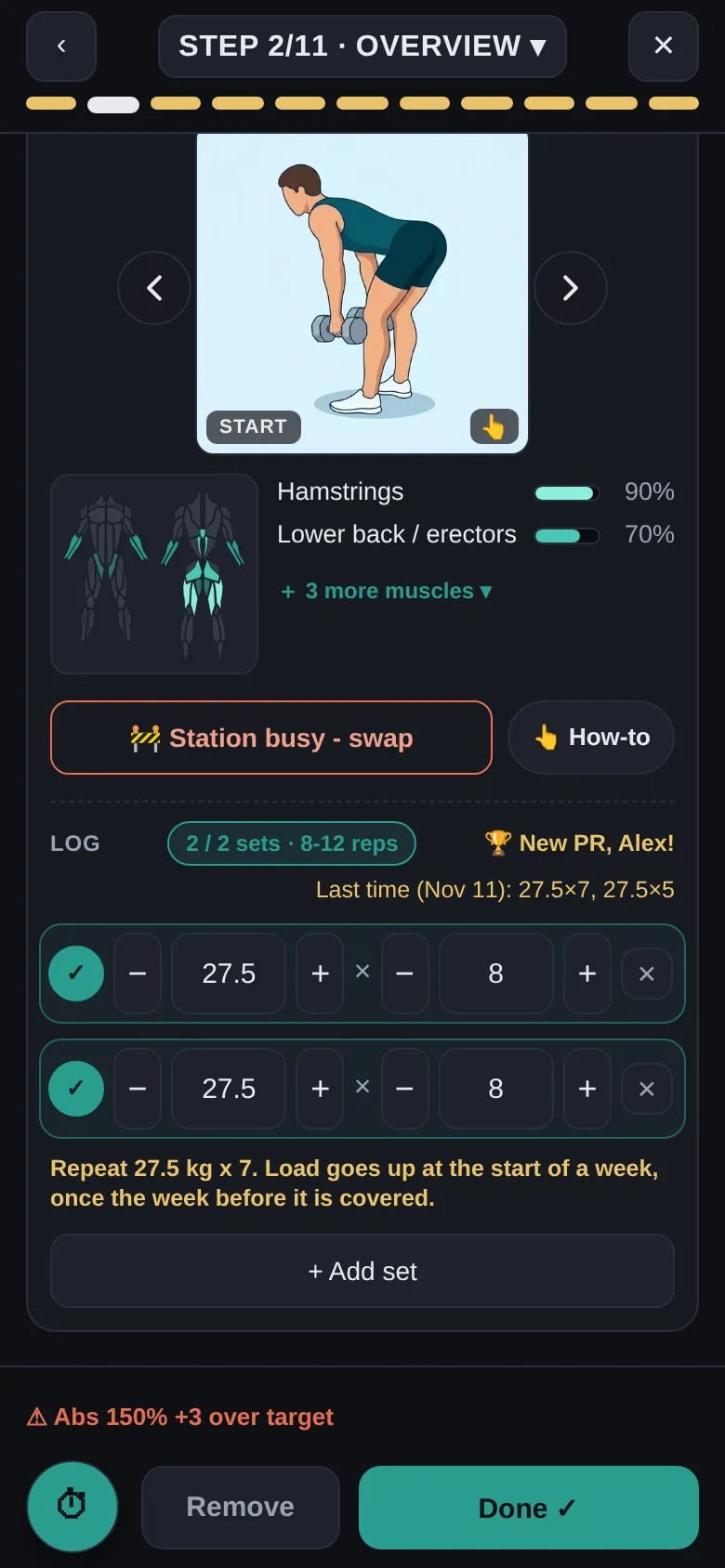
How Many Exercises Per Workout?
The usual answer is 4-7 exercises. Measured against every muscle group, that leaves a third of them short, and the exercises people add next fix none of it.
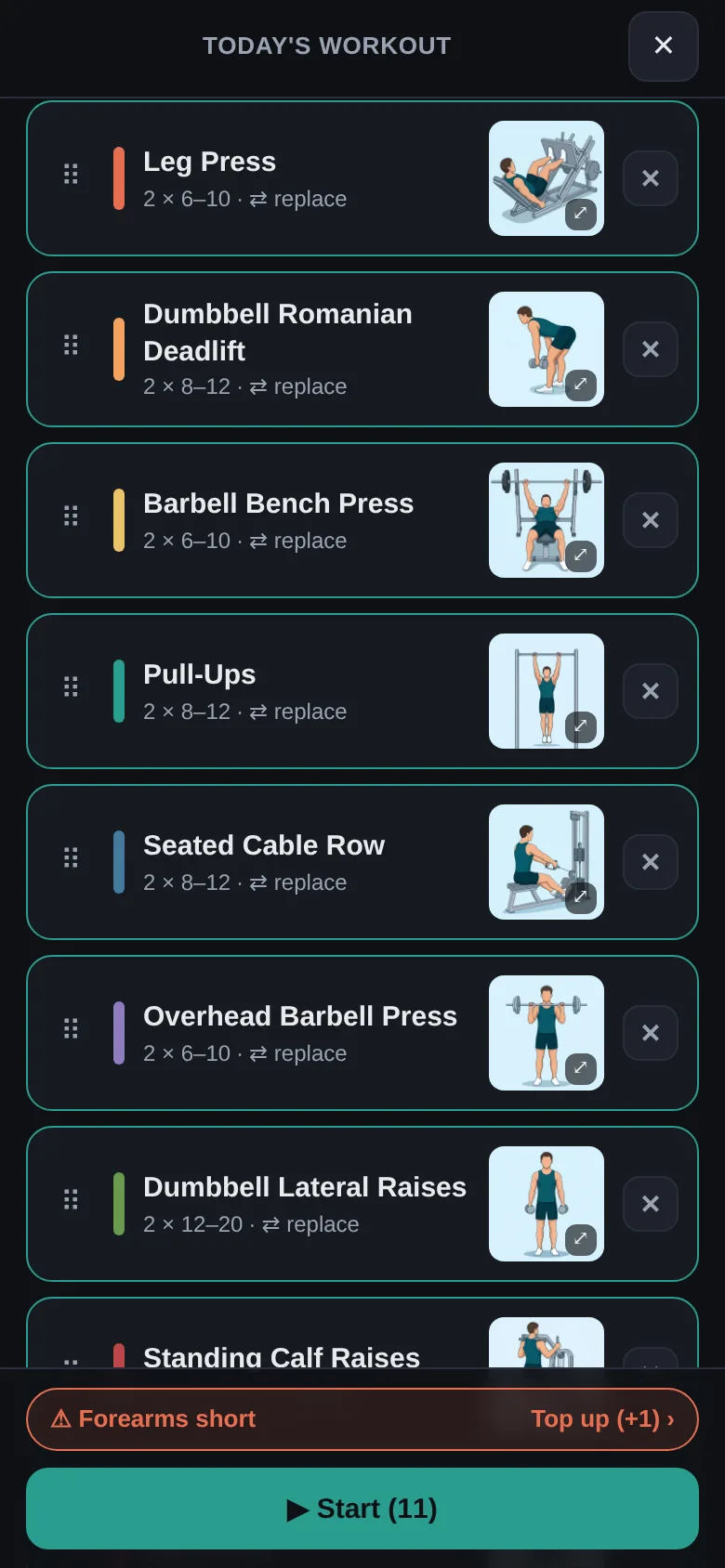
Full-Body Workout That Hits All 18 Muscles
A compound-first, 11-exercise full-body routine built to load quads, hamstrings, chest, back, shoulders, arms and abs (all 18 groups) in one session.
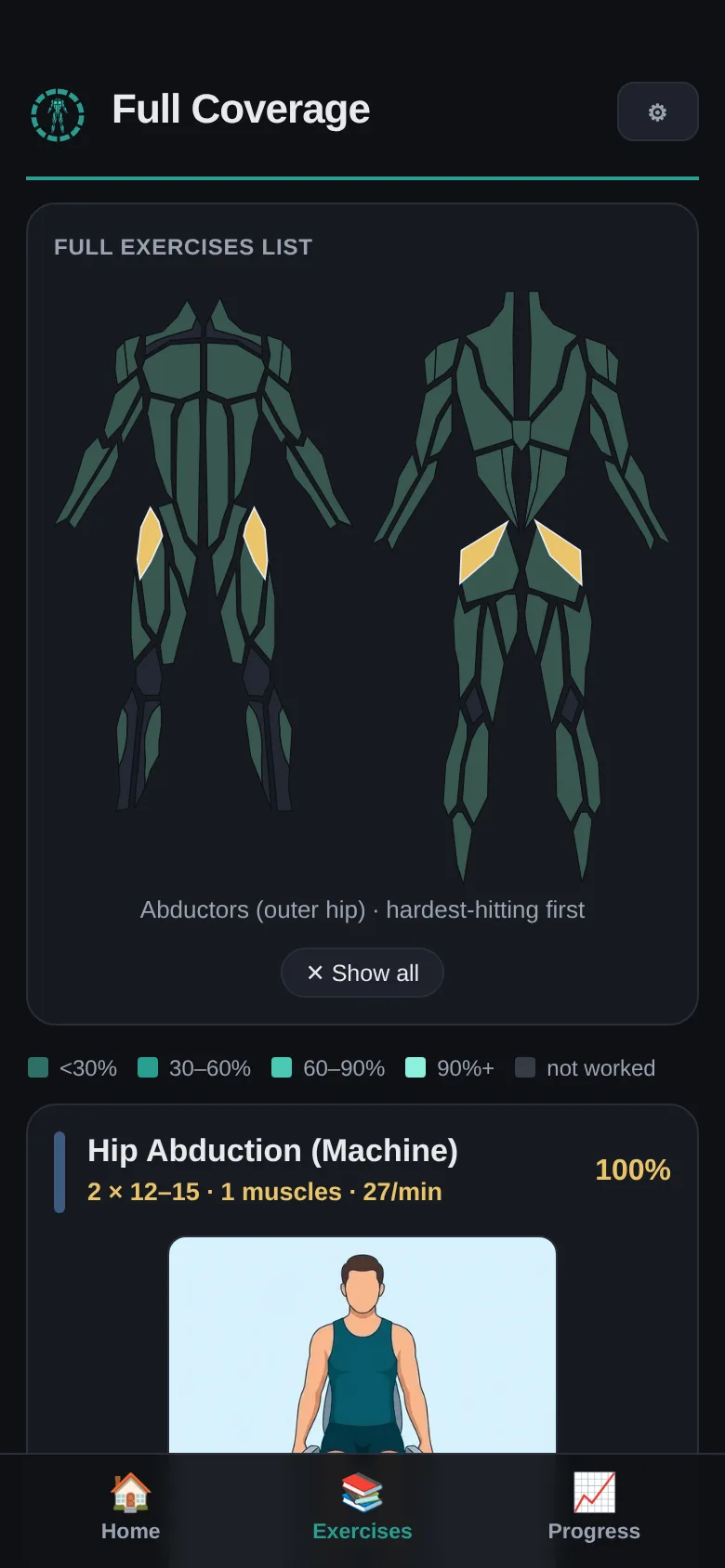
Adductors and Abductors: Do You Need Them?
The two groups almost every routine skips and almost every lifter dismisses. What they do, what your program gives them, and what closing the gap costs.