Guides / Full-Body Workout That Hits All 18 Muscles
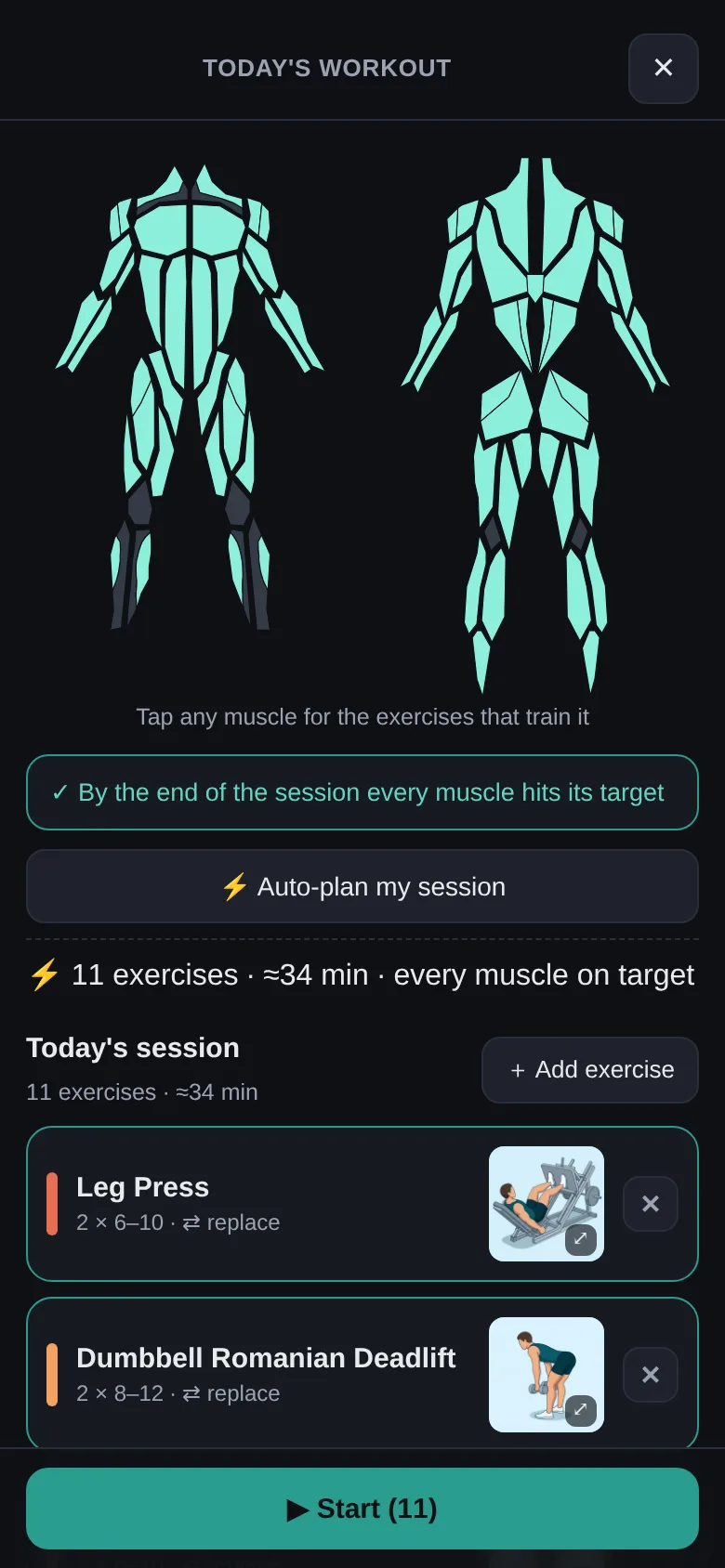
The 11-exercise full-body workout that hits all 18 muscle groups
This is Full Coverage’s default program: 11 exercises, roughly 22 total work sets, about 39 minutes - built so every one of 18 muscle groups reaches at least 100% of a full session’s target load, with compounds doing most of the work and isolation only added where they can’t reach.
By Mike Zino, founder · Updated 2026-08-06
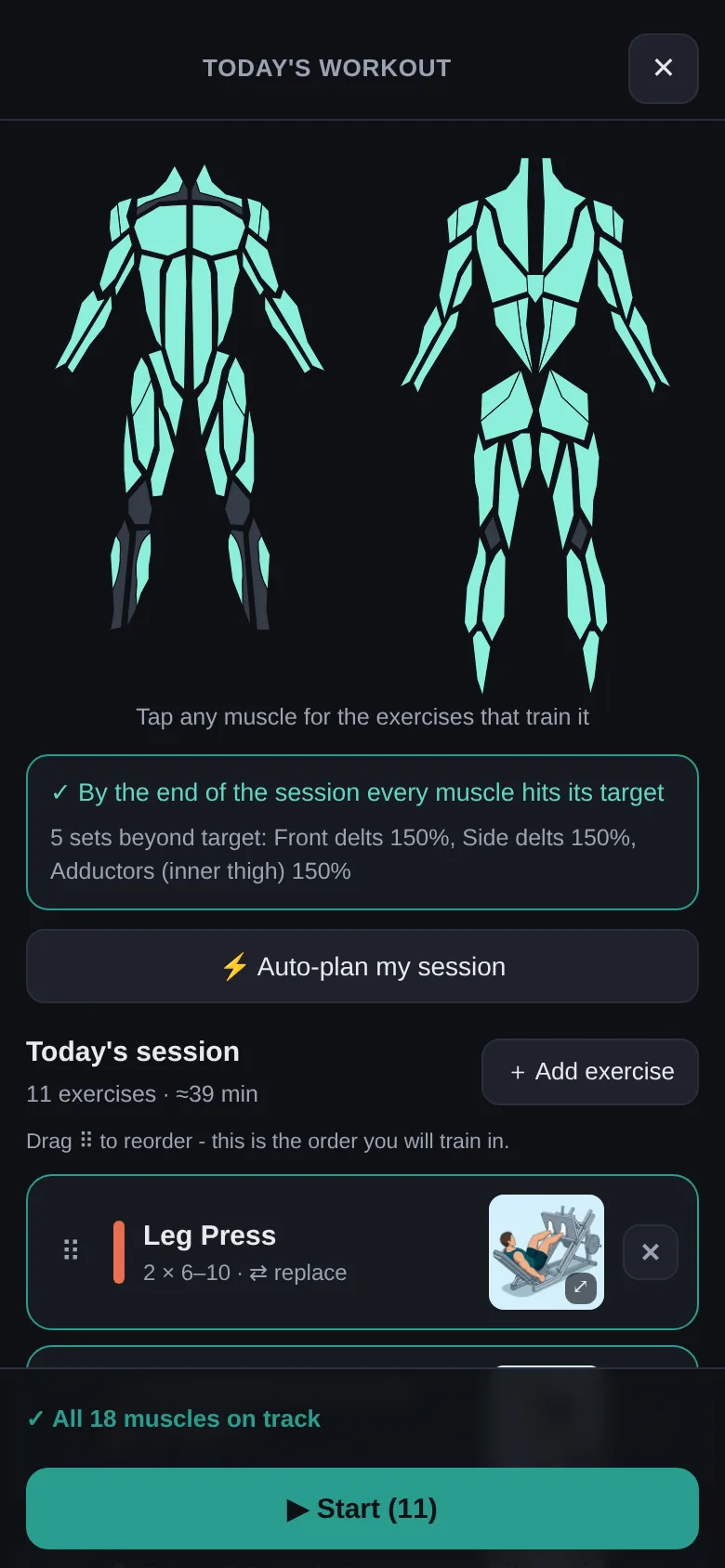
Step by step
Barbell squat
The lower-body anchor - primary quads, with real secondary load on glutes, hamstrings, lower back and adductors.
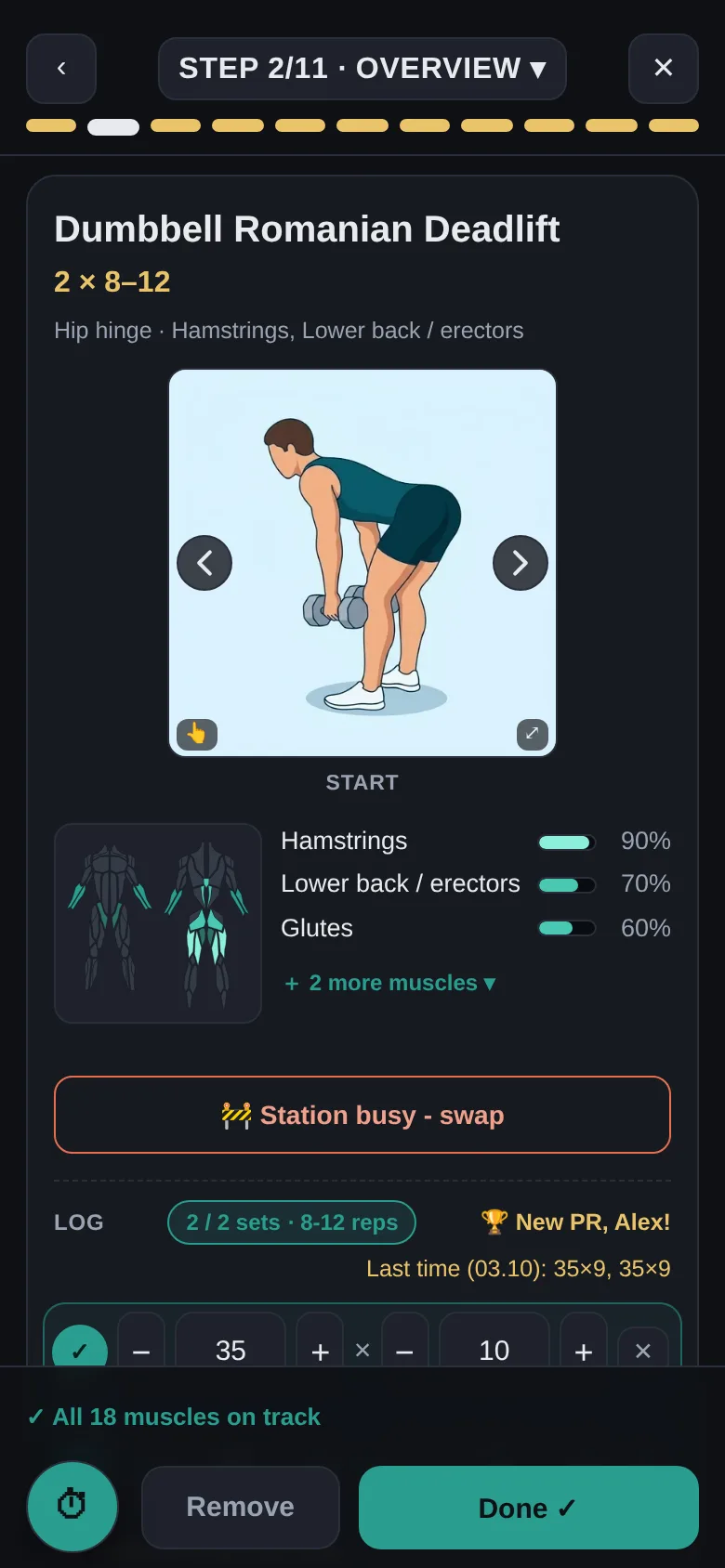
Romanian deadlift
The hinge counterpart to the squat: primary hamstrings and lower back, with meaningful glute and mid-back involvement from holding the bar.
Barbell bench press
Horizontal press: primary chest, with substantial front-delt and triceps work - anterior delts do roughly half the work chest does in a flat press.
Lat pulldown
Vertical pull, mirroring the bench press: primary lats, with rear-delt, mid-back and bicep involvement from the pulling motion.
Seated cable row
Horizontal pull: primary mid-back and rear delts, with real lat and bicep contribution - the row/pulldown pair is why there’s no separate arm day in this program.
Overhead barbell press
Vertical press: primary front delts, with side-delt and triceps involvement, plus core bracing.
Dumbbell lateral raises
Isolation for side delts - the compounds above can’t reach this muscle directly, so it gets its own movement.
Standing calf raises
Isolation for calves, the other muscle the compound lifts barely touch.
Hip adduction (machine)
Direct inner-thigh (adductor) work - added specifically to close a gap the squat and hinge don’t fully cover, without stacking redundant quad/glute volume on top of them.
Twisting core work (e.g. hanging knee raises)
Core, last on purpose - a fatigued trunk before the compound lifts is a stability risk, so it’s scheduled after everything else.
Why only 10 exercises
Every muscle a compound lift already reaches doesn’t need its own isolation exercise - that’s wasted time (pillar 2 of the app: fewest exercises, least time, never compromising pillar 1’s 100% coverage). The two pull exercises alone load biceps, rear delts and grip, which is why there’s no separate arm day: adding one would just be redundant volume on muscles already covered. That is not a stylistic preference - the best-supported way to count training volume treats an assisting muscle as a fraction of a set rather than as nothing Pelland 2025, so the biceps work in a row is real work and gets counted as such.
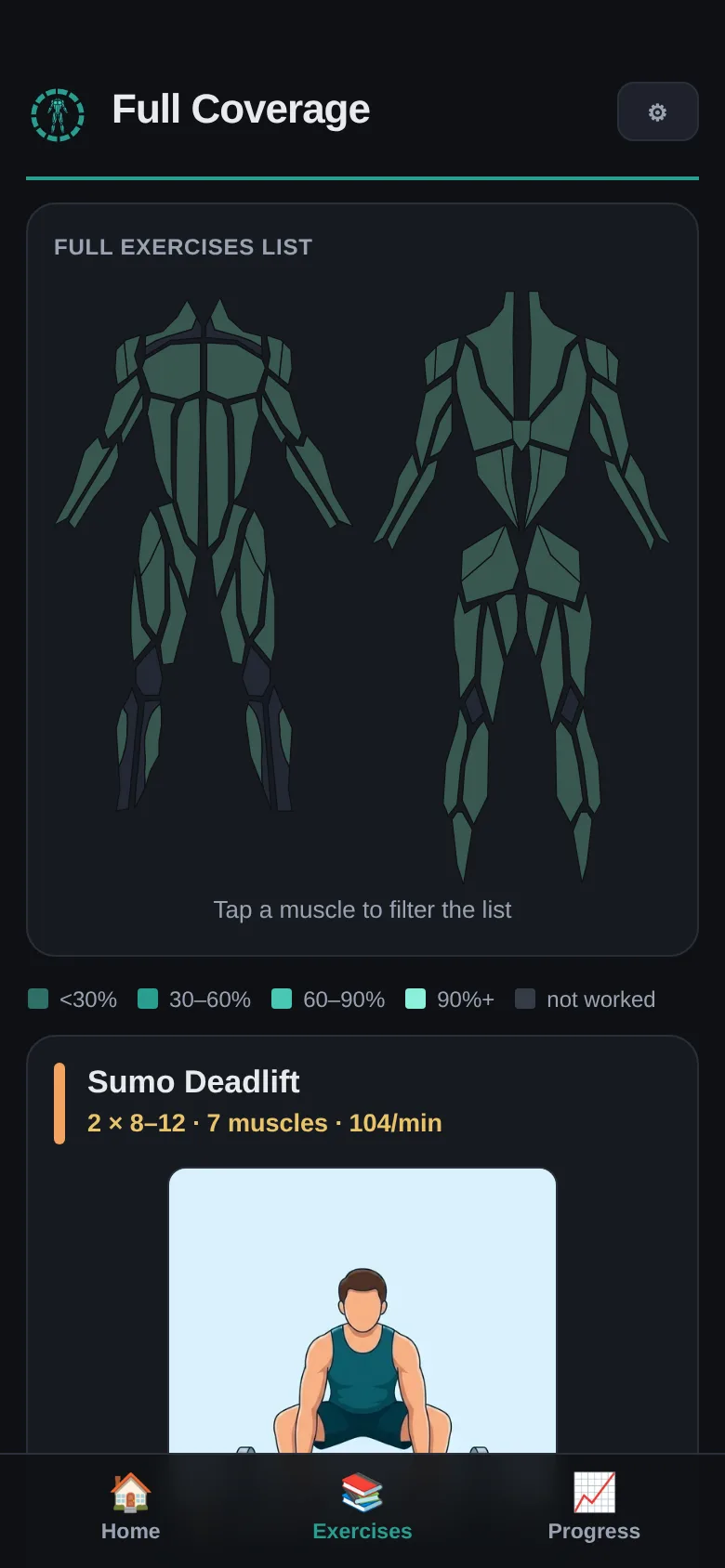
The catalog behind this program has 39 exercises and 270 equipment variants in total - every exercise above has swap-ins for whatever your gym has free, and Full Coverage recalculates the same percentages for whichever variant you pick.
Who this is for
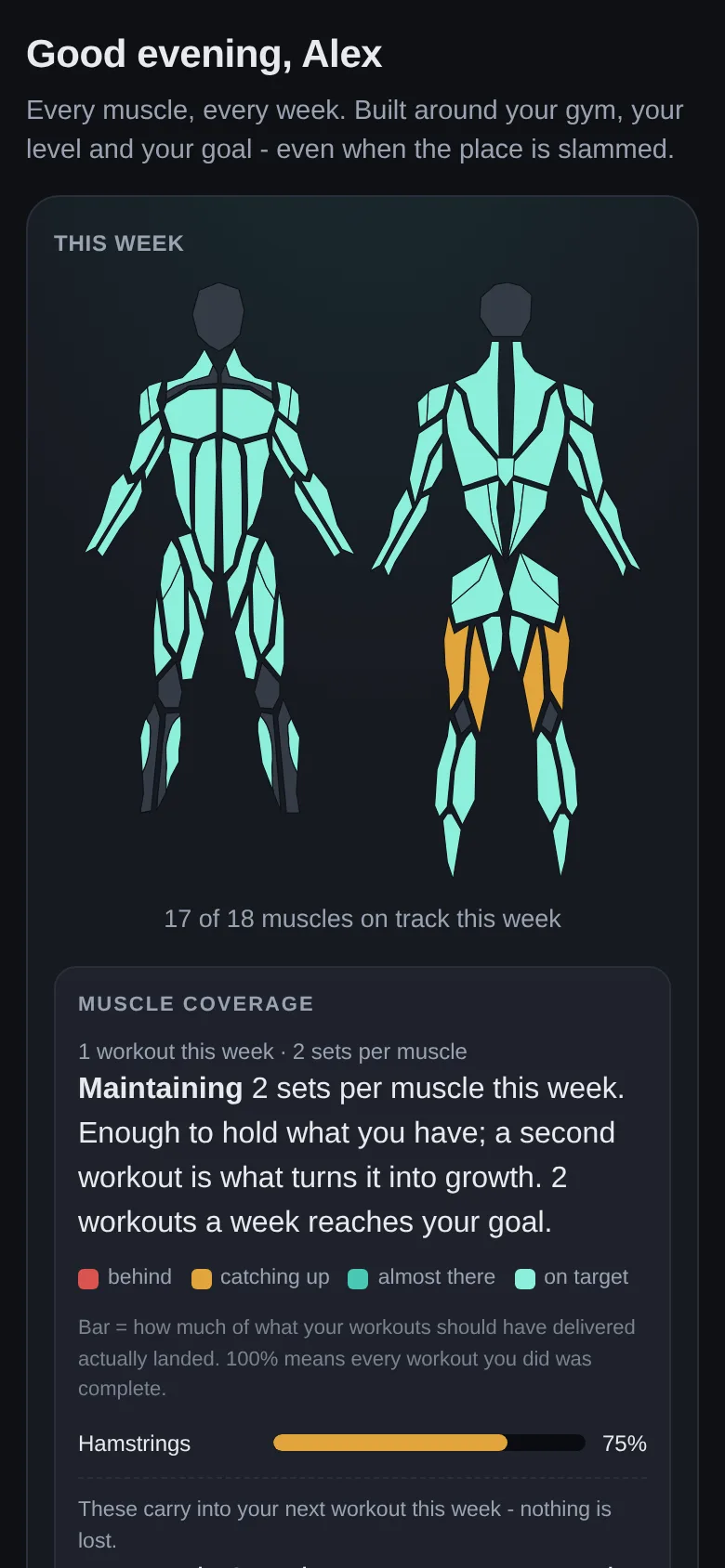
Full-body training at 2–3 sessions a week suits anyone whose schedule (or gym) isn’t predictable enough for a strict split: miss a day and the next full-body session still covers everything, instead of leaving a muscle group untouched for a week. Two sessions a week covering every major muscle group is also the floor both the WHO and the ACSM set for healthy adults Currier 2026, so this is the low end of a guideline rather than a shortcut around one.
Related guides
How Many Exercises Per Workout?
The usual answer is 4-7 exercises. Measured against every muscle group, that leaves a third of them short - and the exercises people add next fix none of it.
Fitbod Alternatives: 5 Apps Compared
An honest comparison of Fitbod alternatives - Alpha Progression, Hevy, Boostcamp, JEFIT and Full Coverage - with prices and who each one is for.
Full Body vs. Push/Pull/Legs for a Busy Week
Full body 2–3x a week vs. a 3-day push/pull/legs split - how they compare on missed workouts, time per session, and total weekly muscle coverage.