Guides / Dumbbell-Only Full-Body Workout
The dumbbell-only full-body workout, and its real limits
Every home-workout article says the same thing: you can train every major muscle group with a pair of dumbbells. Measured, it is one group short - and which group, and what closes it, is the part worth knowing before you buy anything.
By Mike Zino, founder · Updated 2026-09-27
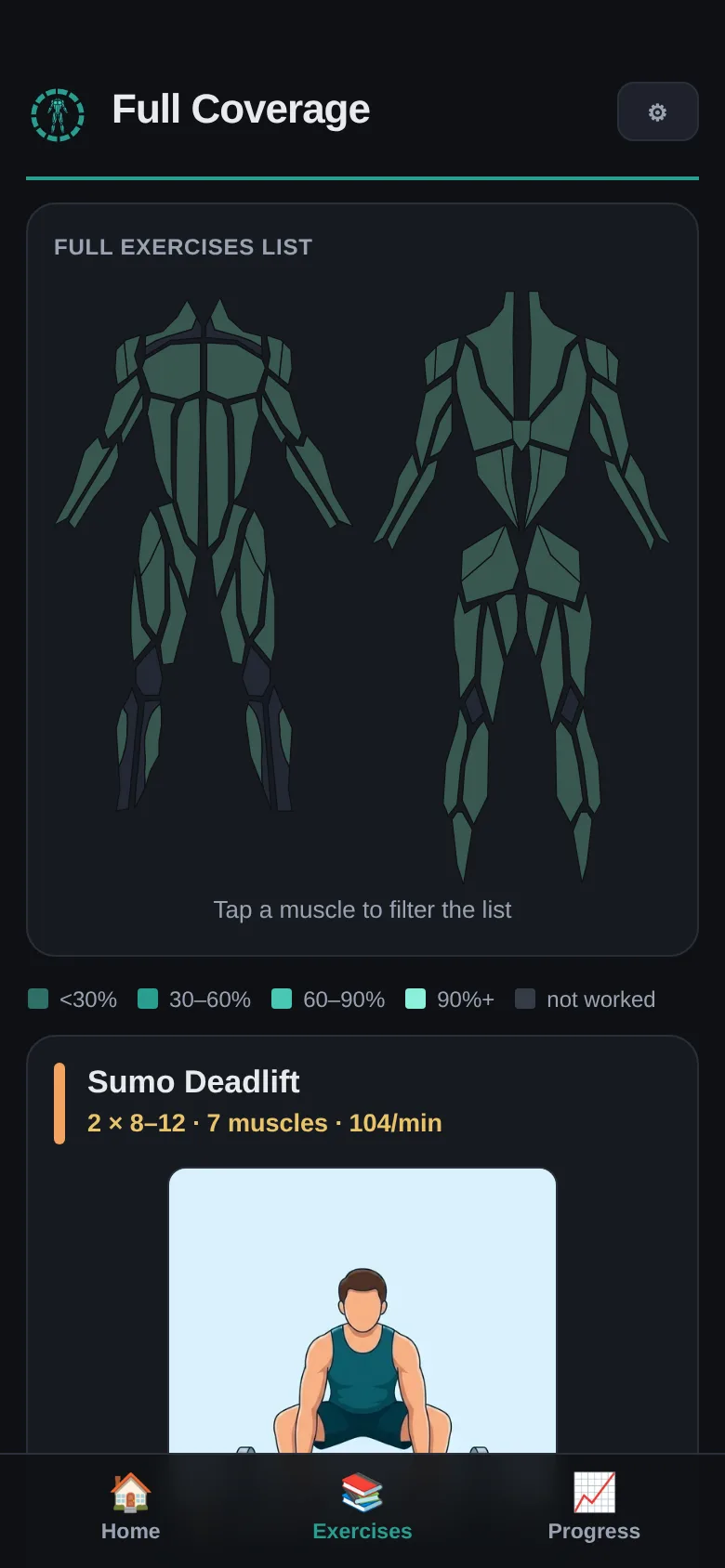
What each tier of kit actually reaches
"Reaches" here means something specific: with that equipment and nothing else, is there any combination of movements that takes this muscle group to a full session's target? Not "works it a bit" - takes it to target. Measured across all 18 groups at intermediate level:
| What you own | Groups it can take to target | What it cannot |
|---|---|---|
| Bench alone | 0 | everything - a bench is a modifier, not a tool |
| Bodyweight only | 12 | Lats, Mid-back / traps, Rear delts, Side delts, Biceps, Forearms |
| Bodyweight + Pull-up bar | 14 | Rear delts, Side delts, Biceps, Forearms |
| One pair of Dumbbells | 17 | Lats |
| Dumbbells + Bench | 18 | nothing |
Two rows carry the whole article. A single pair of adjustable dumbbells reaches seventeen of the 18 groups on its own, which is more than the barbell, the cable stack or a rack of machines manages alone. And the one it misses is the Lats - because a vertical pull needs something to hang from or something to lie on, and a floor and two dumbbells are neither. Add either one and the set closes.
The bodyweight problem is pulling, not pushing
The received wisdom is that bodyweight training struggles with legs. Measured, that is not where it breaks. Bodyweight alone covers the quads, glutes, chest, Triceps, Abs and Calves perfectly well - push-ups, squats, planks and calf raises are real work.
Where it fails is pulling. Without something to hang from or pull against, the Lats, Mid-back / traps, Rear delts and Biceps have nothing to load them, and no amount of clever floor work fixes it. That is a physics problem, not a programming one.
Which is why a Pull-up bar - the cheapest piece of equipment in this whole article - is worth more than almost anything else you could buy first. It moves three whole groups from unreachable to reachable. Whether it or a pair of dumbbells is the better first purchase depends on your budget: dumbbells open six groups rather than three, at rather more than three times the price.
What a dumbbell-only session looks like
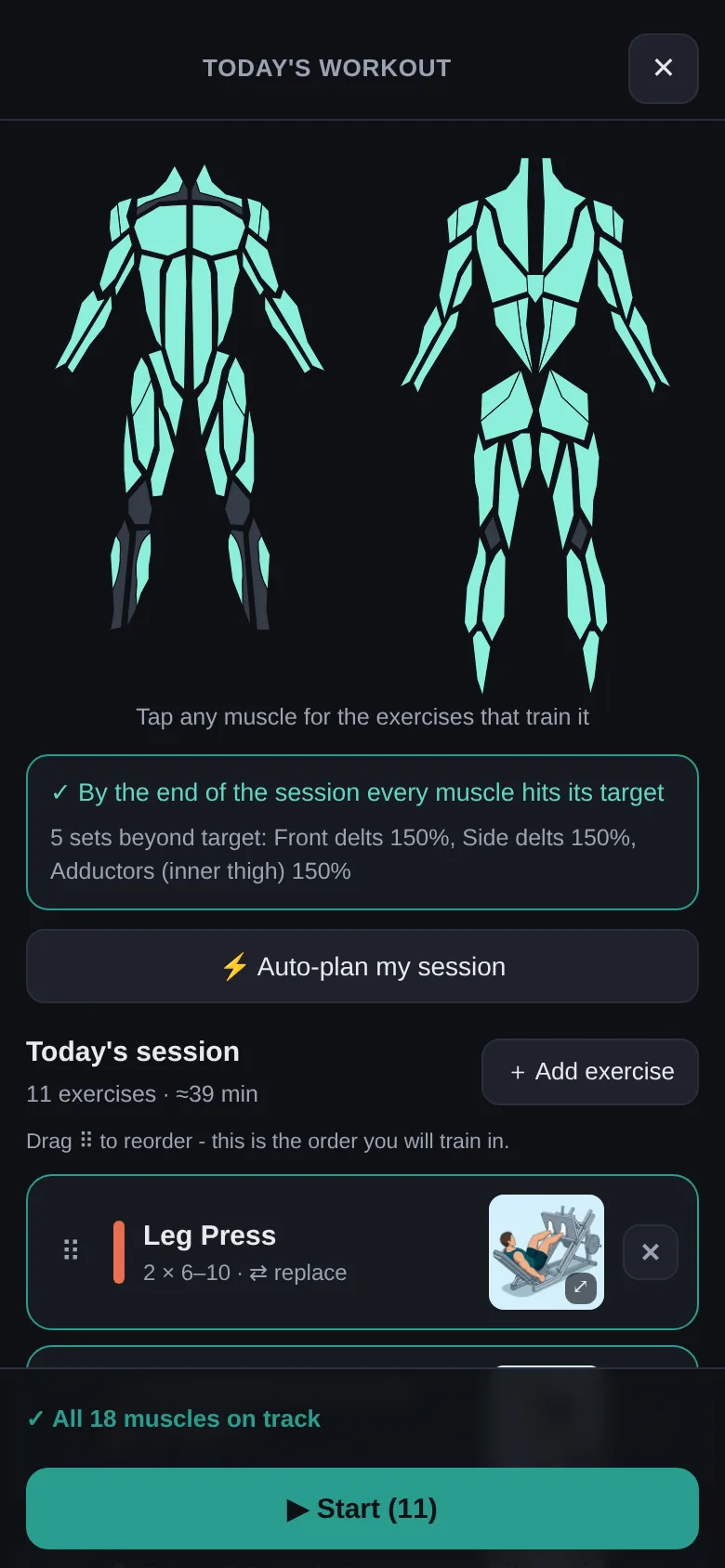
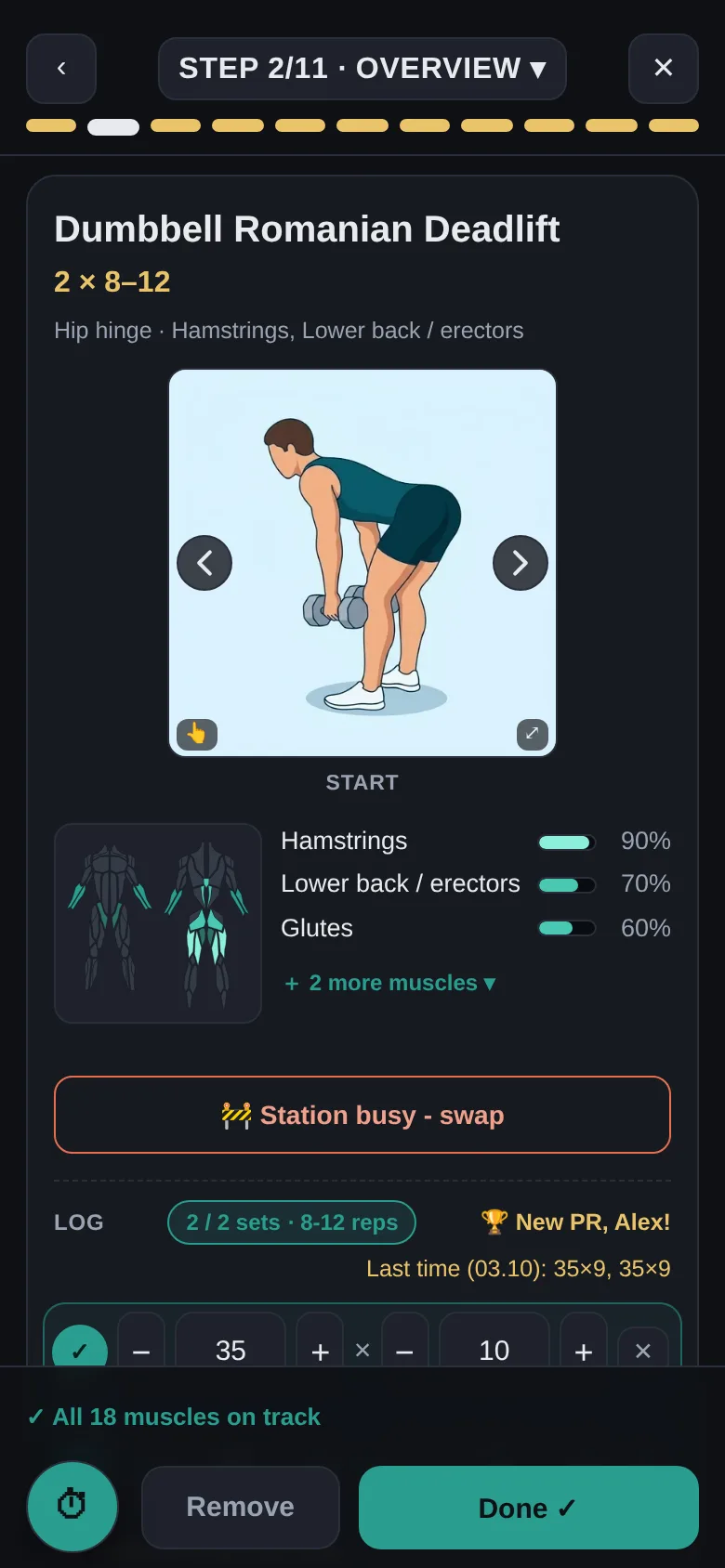
Asked for the fewest movements that cover everything a pair of dumbbells can reach, the solver returns twelve, in about 42 minutes: a bodyweight squat, a dumbbell deadlift, a floor press, a bent-over row, a standing press, lateral raises, a bent-over reverse fly, hammer curls, side-lying hip adduction and abduction, calf raises and lying windshield wipers.
Two things are worth noticing about that list. It is longer than the gym version, because dumbbells force more single-joint work where a gym would use one machine. And it is heavy on unilateral movements - single-leg, single-arm - which is the standard workaround for not owning heavy enough weights, and it costs time rather than results.
Add a bench and it becomes thirteen movements in about 46 minutes with nothing short at all - the bench buys a chest-supported row and a straight-arm pullover, and the pullover is what finally loads the Lats. That is the honest ceiling of a home setup, and it is a complete one.
Buying in the right order
If you are equipping a room from nothing, the order that buys the most coverage per pound is:
1. Adjustable dumbbells. The only single purchase that reaches every group. Adjustable rather than fixed matters more than people expect - the whole dumbbell-only approach depends on being able to load a squat pattern and a lateral raise from the same kit.
2. A pull-up bar. Cheap, and it turns your back work from "adequate" into real vertical pulling.
3. An adjustable bench. Reaches nothing on its own - genuinely zero - but it is the piece that closes the last group, because lying down is what makes a pullover possible. Third rather than never.
The equipment pages state the same figure for every kind of kit in the catalog, including what each one cannot reach. It is the number nobody else publishes, and it is the one that should decide a purchase.
The short version: one pair of dumbbells covers seventeen of the 18 groups and misses the Lats. Bodyweight alone cannot pull, and that costs it six. A bench reaches nothing by itself, and it is the cheapest thing that finishes the set.
Related guides
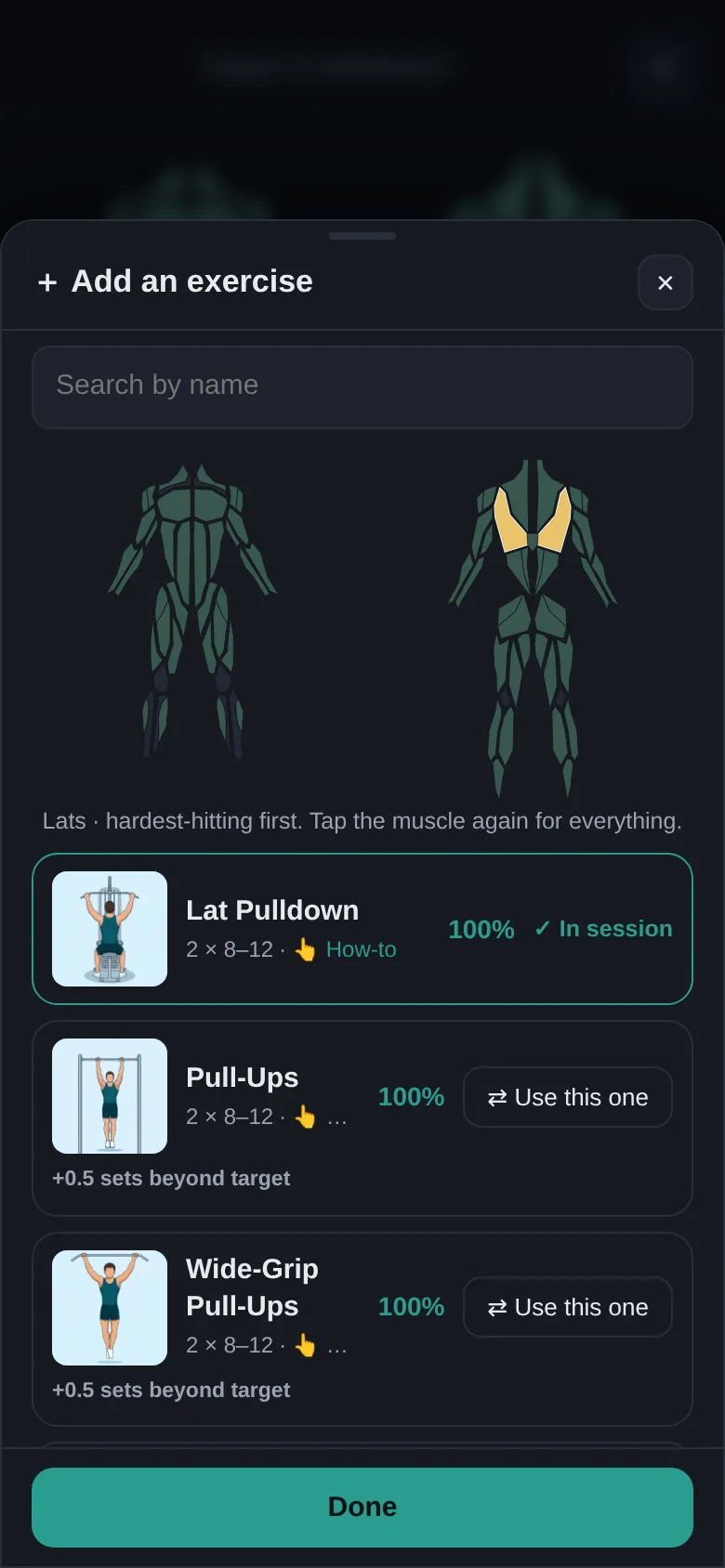
Which Muscles Is Your Workout Missing?
Most routines miss the same handful of muscle groups. Here they are, measured - with what a classic five-lift routine actually delivers to each one.
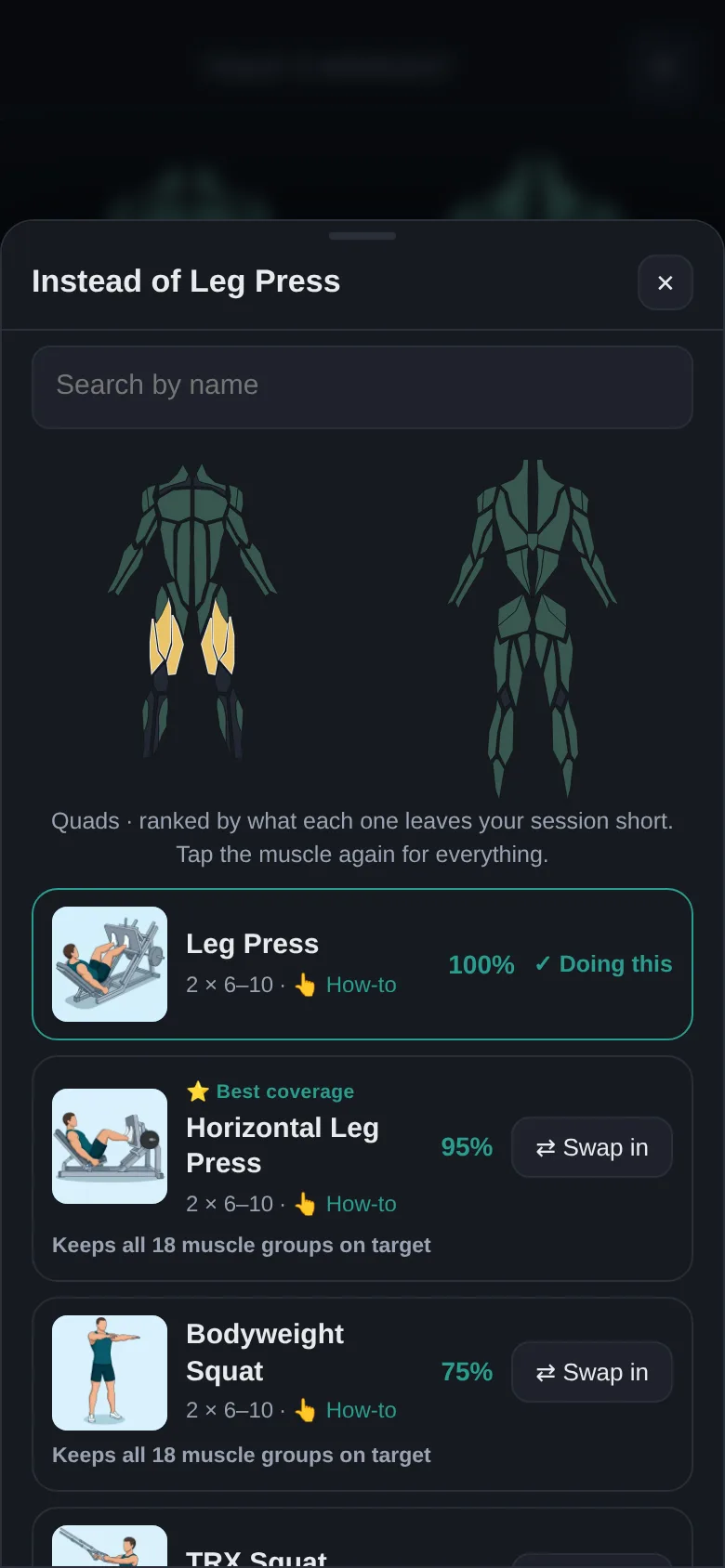
Full-Body Workout for a Crowded Gym
Peak-hour gym, every good station taken? Here’s how to still hit every muscle group in one session - without waiting or skipping anything.
How Many Exercises Per Workout?
The usual answer is 4-7 exercises. Measured against every muscle group, that leaves a third of them short - and the exercises people add next fix none of it.