Guides / Full-Body Workout for a Crowded Gym
How to get a full-body workout when the gym is crowded
Peak hours turn a planned session into a scavenger hunt: your squat rack is taken, so is the cable station, and now you’re improvising. Here’s a repeatable way to finish a complete full-body session anyway, with every muscle covered and no waiting.
By Mike Zino, founder · Updated 2026-11-16
Step by step
Build the session around movement patterns, not specific machines
Before you walk in, know which muscle each planned exercise is there for, not just what it is called. A squat is a "quad/glute compound", a lat pulldown is a "vertical pull". Thinking in those terms is what makes step 2 possible.
Pre-decide one swap-in per exercise
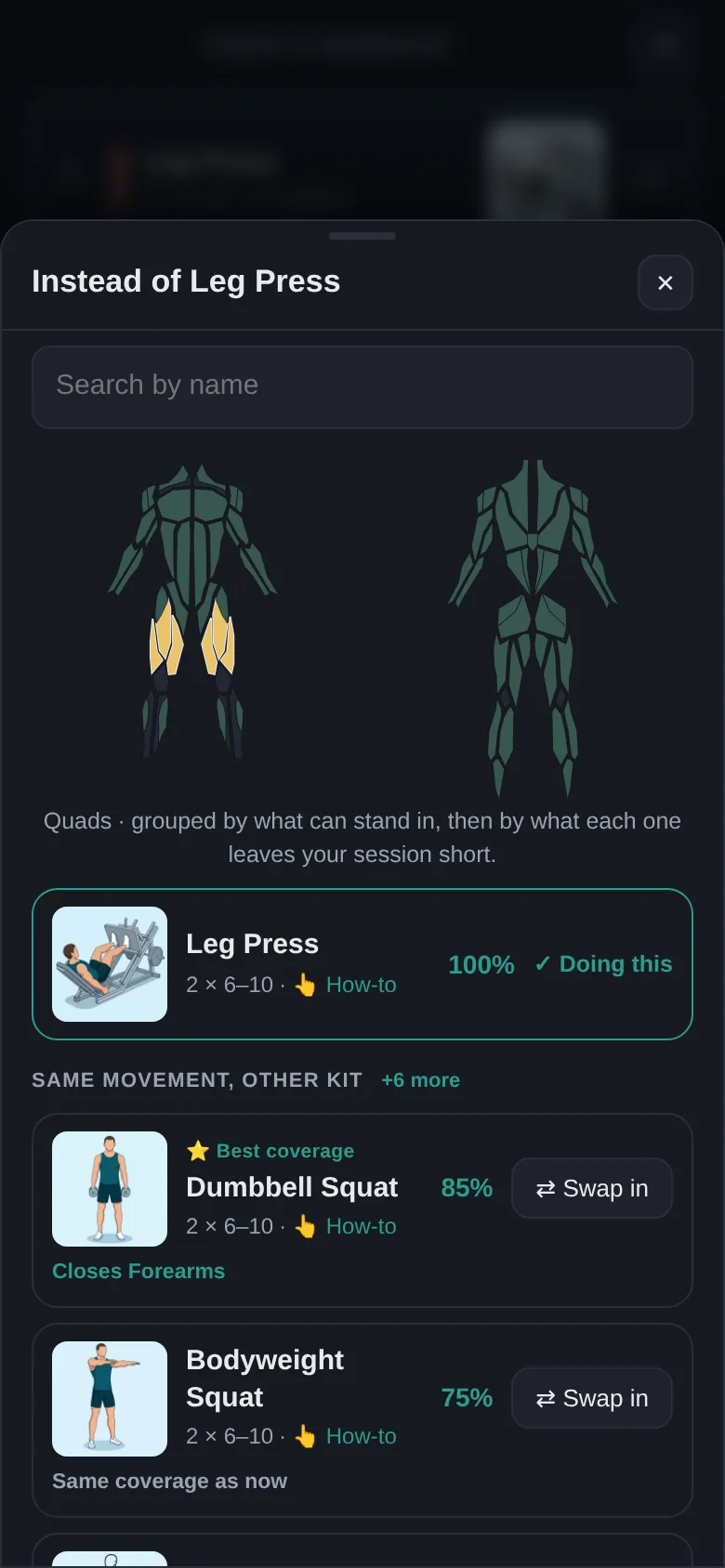
For every compound lift, know one alternative on different equipment that hits close to the same muscles: leg press or goblet squat for the barbell squat, pull-ups or assisted pull-ups for the lat pulldown, dumbbell row or machine row for the cable row. When your first choice is taken, you already know the backup and don’t stand there deciding.
Swap instead of waiting
A busy station costs you nothing if the swap-in covers the same muscle at close to the same percentage. In Full Coverage, "Station busy - swap" lists the alternatives your equipment allows, each with its percentage for that muscle, and the coverage map redraws as soon as you take one, so you can see whether the swap holds. Pro also ranks the list by what each swap would leave short.
Track what the swap cost you
Some substitutions are a wash; others leave a muscle under target without you noticing (a bodyweight-only session, for instance, tends to under-load direct adductor and lower-back work). Note anything that came in low so you can close it later in the same session or next time.
Close the gap before you leave, or roll it forward
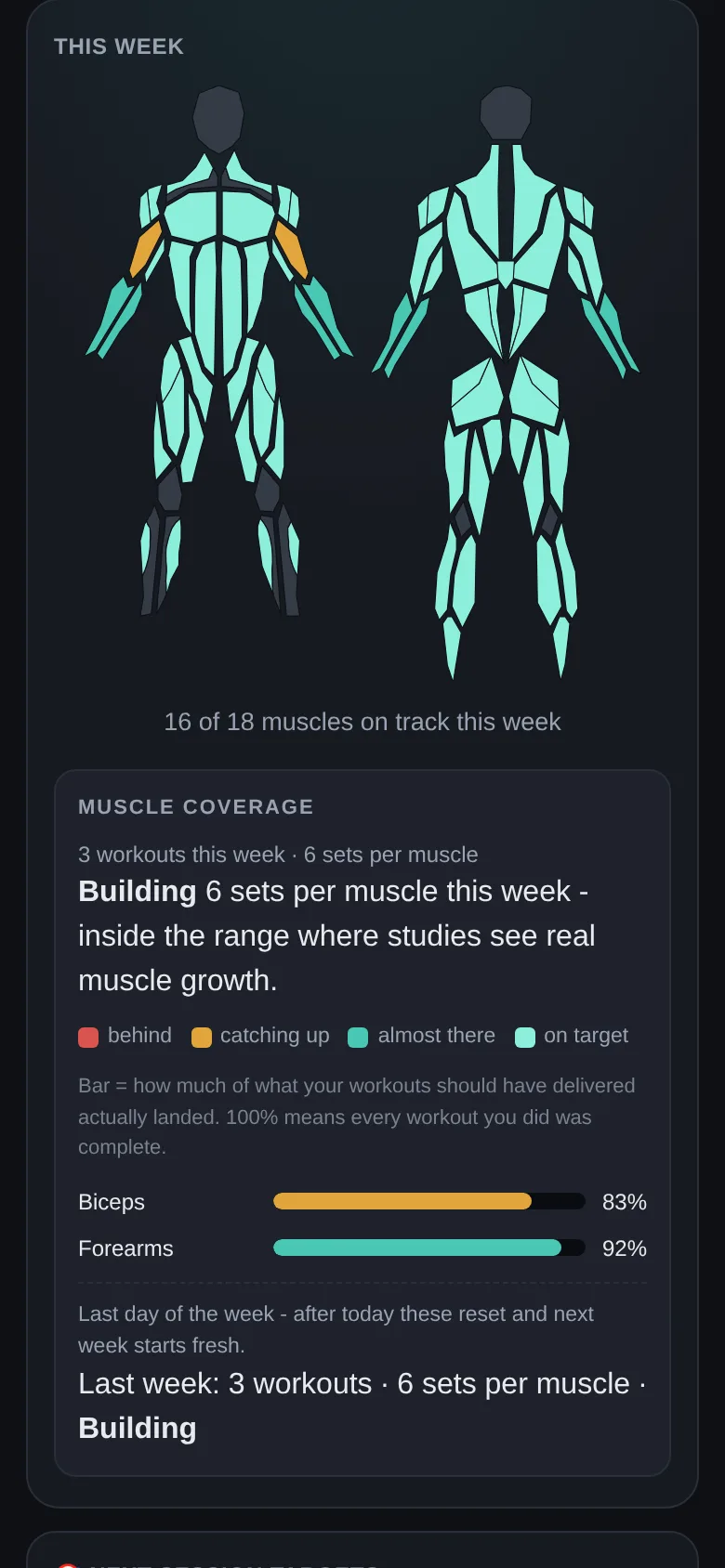
If one muscle is still short at the end, one extra exercise on whatever free station trains it usually closes the gap. If you’re out of time, missed-muscle carryover raises that muscle’s target for your next session, so it still reaches 100% across the week instead of the shortfall disappearing. That part is free and on screen; Pro is what plans the session that repays it.
Why this works better than showing up early
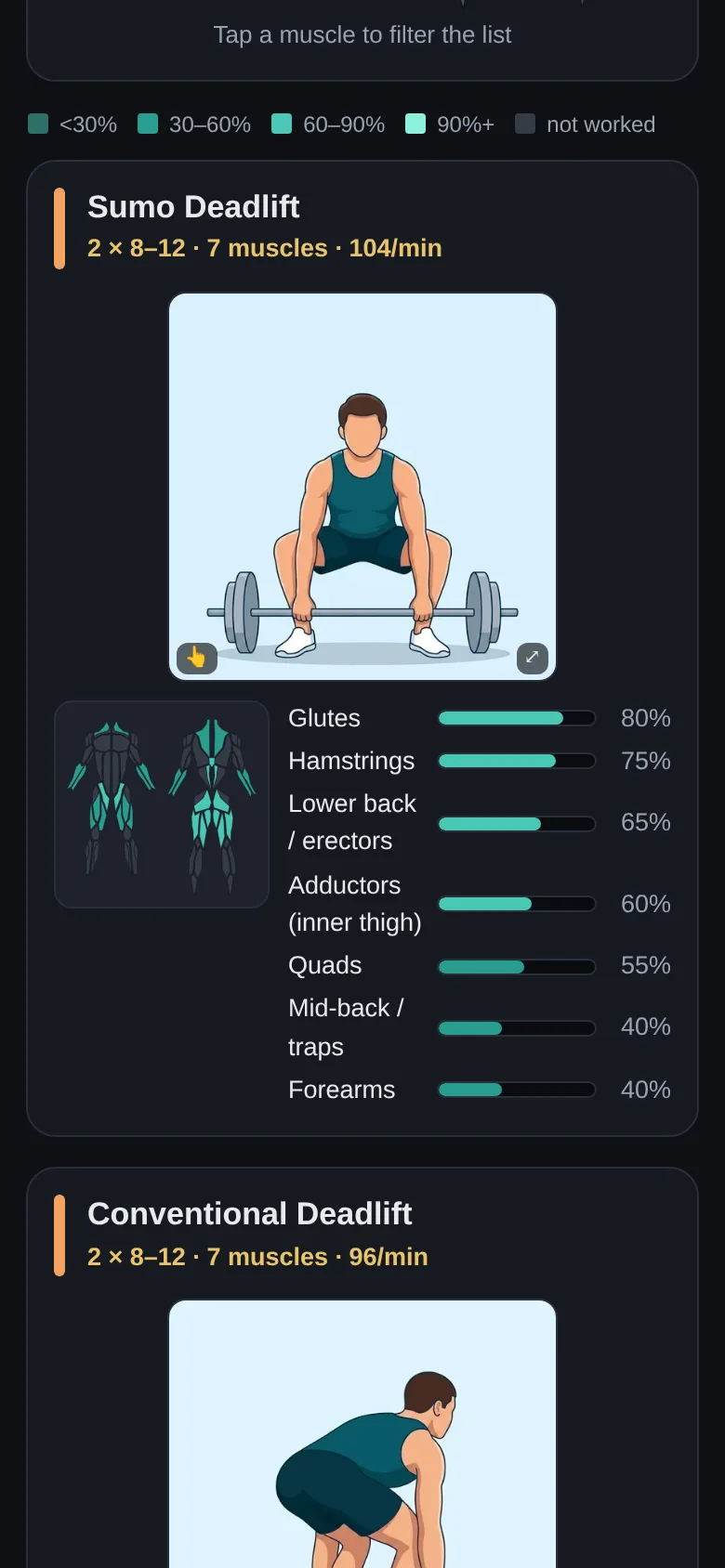
You can’t control gym traffic, but you can control what a busy station costs you. Full Coverage’s live coverage engine is built for that: pick whatever is free and it tells you immediately whether you’re still covered. It can price a substitution because every movement carries a per-muscle activation figure and an assisting muscle counts as a fraction of a set Pelland 2025, so “the leg press instead of the squat” comes with a number attached.
Related guides
Fitbod Alternatives: 5 Apps Compared
Fitbod alternatives compared: Alpha Progression, Hevy, Boostcamp, JEFIT and Full Coverage, with prices and who each one is for.
Dumbbell-Only Full-Body Workout
What one pair of dumbbells covers, measured per muscle group: all 18 with floor work, what bodyweight cannot reach, and what a pull-up bar and a bench add.
Full-Body Workout That Hits All 18 Muscles
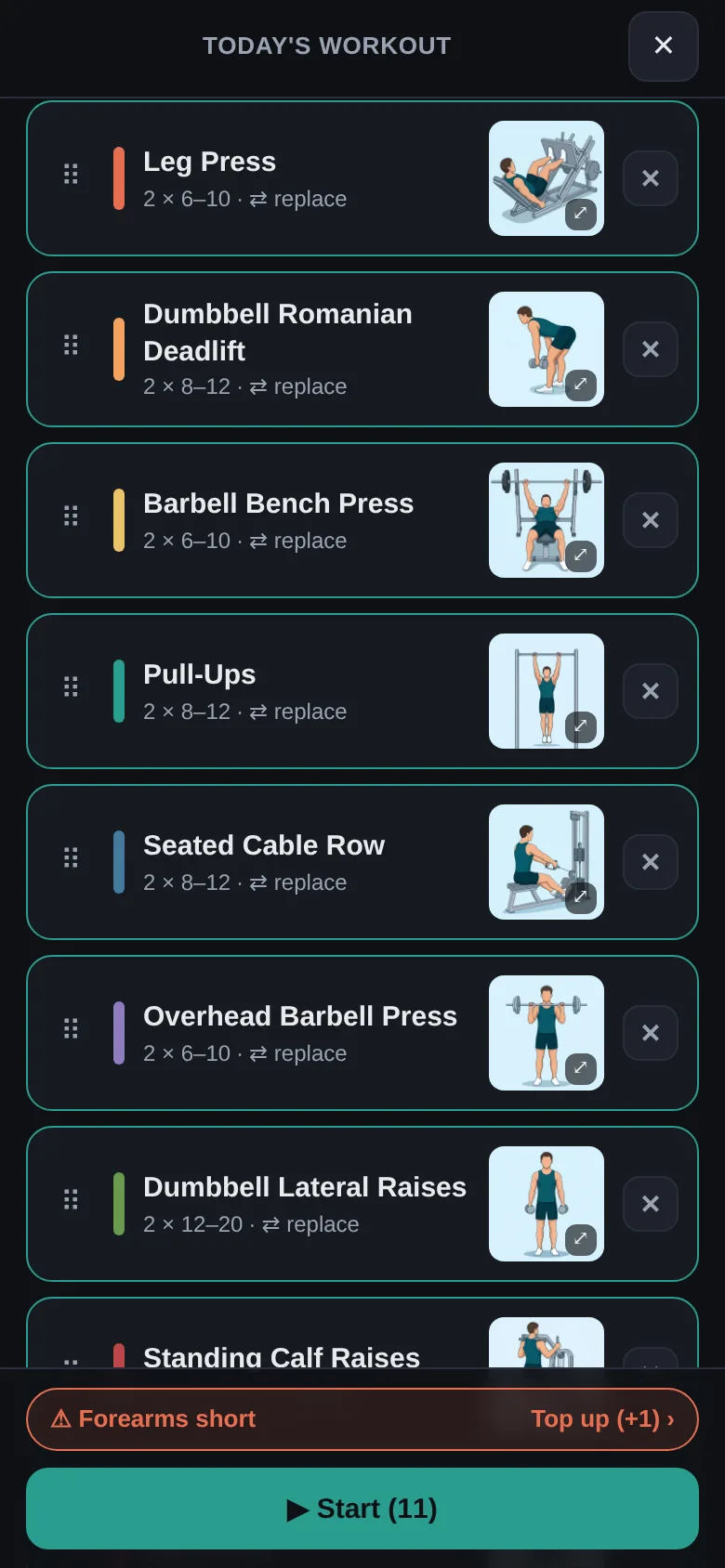
A compound-first, 11-exercise full-body routine built to load quads, hamstrings, chest, back, shoulders, arms and abs (all 18 groups) in one session.