Guides / Full Body vs. Push/Pull/Legs for a Busy Week
Full body vs. push/pull/legs for a busy schedule
Both are legitimate ways to train. The honest answer to "which is better" is: it depends on how predictable your week is - here’s the actual trade-off.
By Mike Zino, founder · Updated 2026-07-20
The core difference
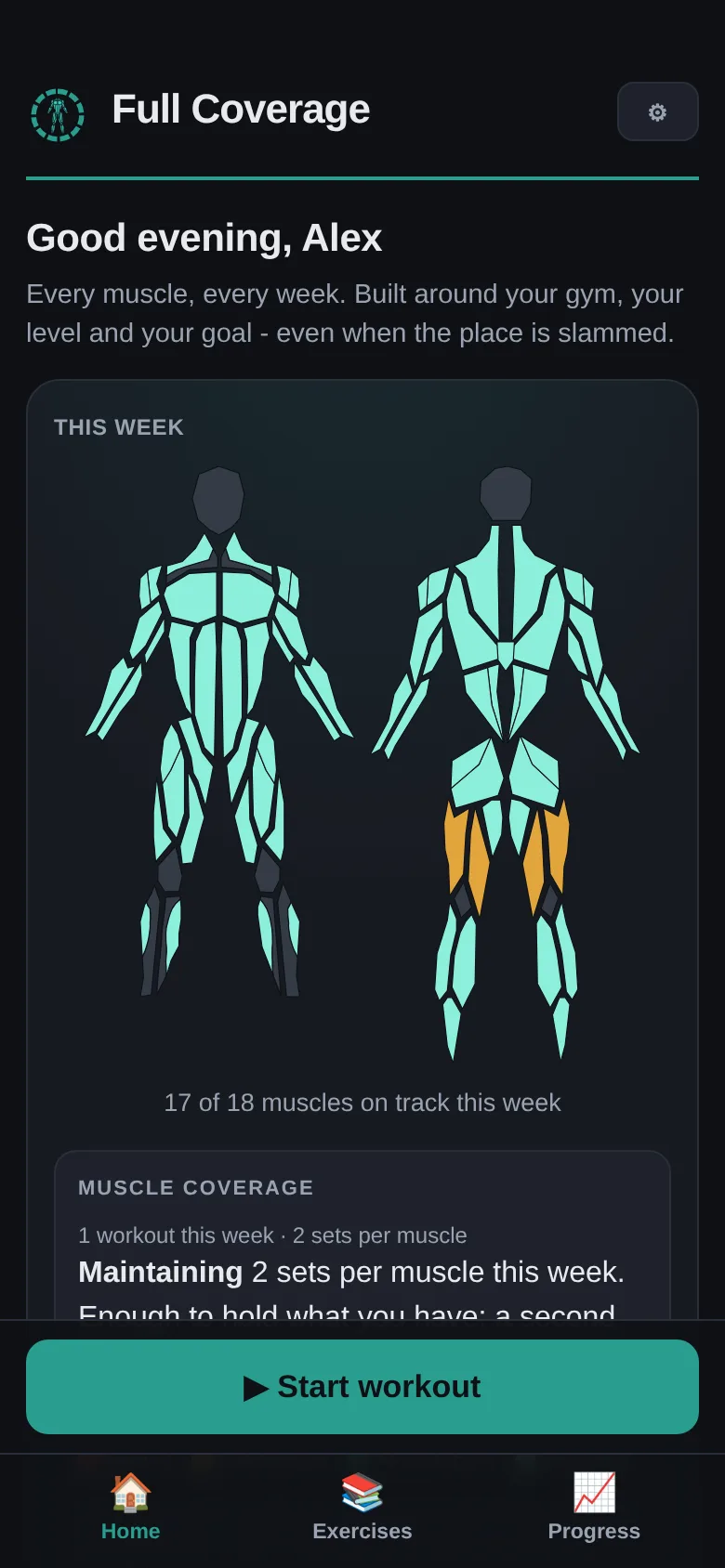
Push/pull/legs (PPL) splits your week into three specialized sessions, each hitting a subset of muscles harder per session. Full body trains all major muscle groups every time, at a lower per-muscle volume per session but higher frequency across the week.
Here is the part most split-versus-full-body arguments get wrong. Once you match the total number of sets per muscle per week, how you distribute them barely matters for muscle growth. The largest analysis of the question found frequency’s own effect on hypertrophy “compatible with negligible effects” Pelland 2025, and a meta-analysis looking specifically at training frequency found no meaningful difference once weekly volume was equated Schoenfeld 2019. Splits do not beat full body and full body does not beat splits. What beats both is the one you actually complete.
What happens when you miss a day
This is where the two programs diverge most in practice. Miss a "legs" day on a PPL split and your legs get zero direct work that week. Miss a full-body session and you’ve lost one workout - every muscle group is still scheduled to come back around at the next one. For anyone whose week isn’t fully in their control (unpredictable hours, a gym that’s sometimes unusable at peak times), that resilience compounds over months.
This is the real argument for full body, and it follows directly from the finding above: if weekly volume is what drives growth Schoenfeld 2017, then the schedule that protects your weekly volume against a missed day is the better schedule, whatever its theoretical merits.
Time per week
A well-built full-body program can be genuinely time-efficient: compound lifts that each load several muscles at once mean a complete session - all 18 muscle groups to their target - fits into around 11 exercises and 34–104 minutes, done 2–3 times a week. A three-day PPL typically runs more total sessions to cover the same ground, which is a real cost if your week is already tight.
When PPL still makes more sense
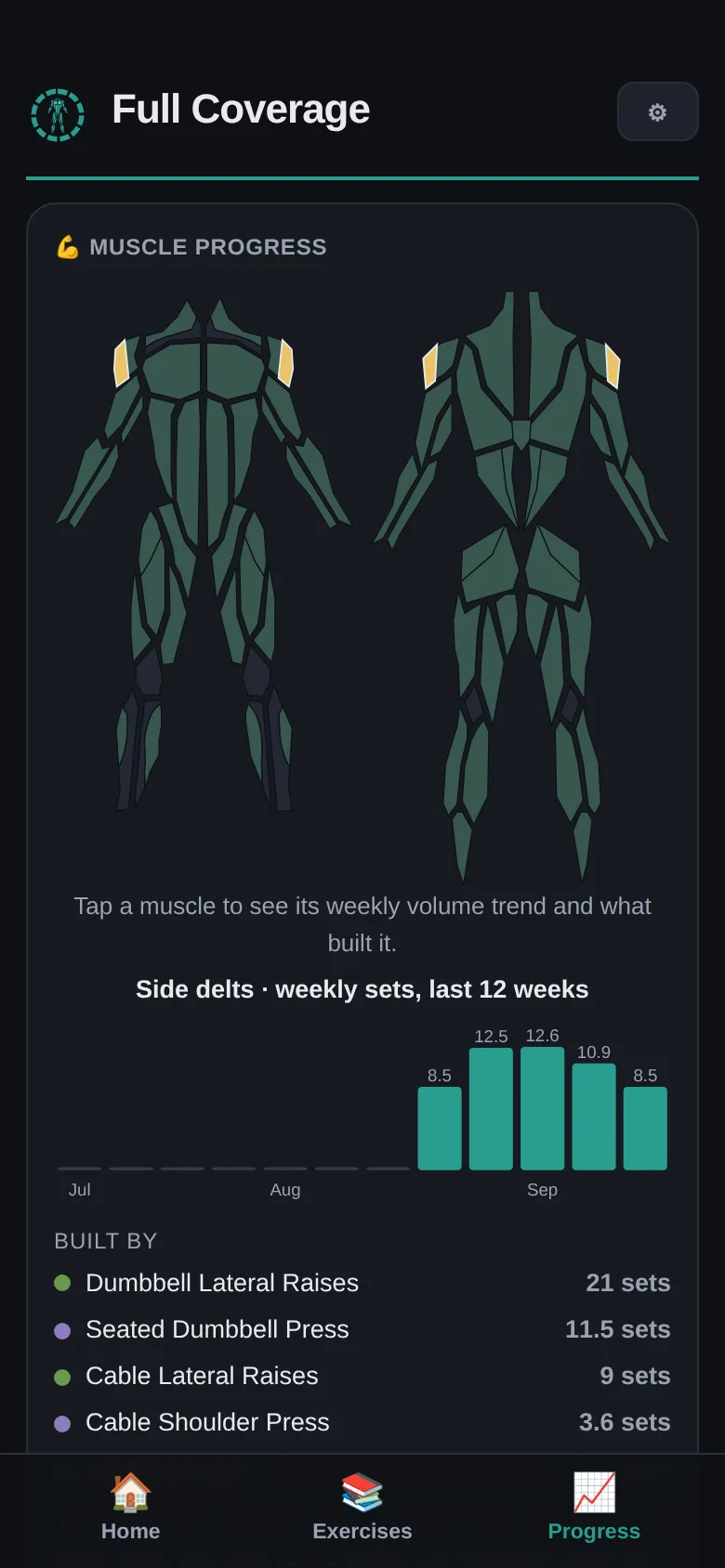
If you can reliably train 5–6 days a week and want to push individual muscle groups harder with more exercises and volume per session, a split lets you do that in a way full body structurally can’t. There is also a ceiling on how much one session can usefully give a single muscle: past roughly 11 fractional sets the extra work stops showing up in the outcome Remmert 2025. Beyond that, the only way to add volume is to add days - which is what a split is for. It’s a legitimate choice for a stable, high-frequency schedule - full body is the better fit when your schedule (or your gym) is the variable you can’t control.
Related guides
Full-Body Workout That Hits All 18 Muscles
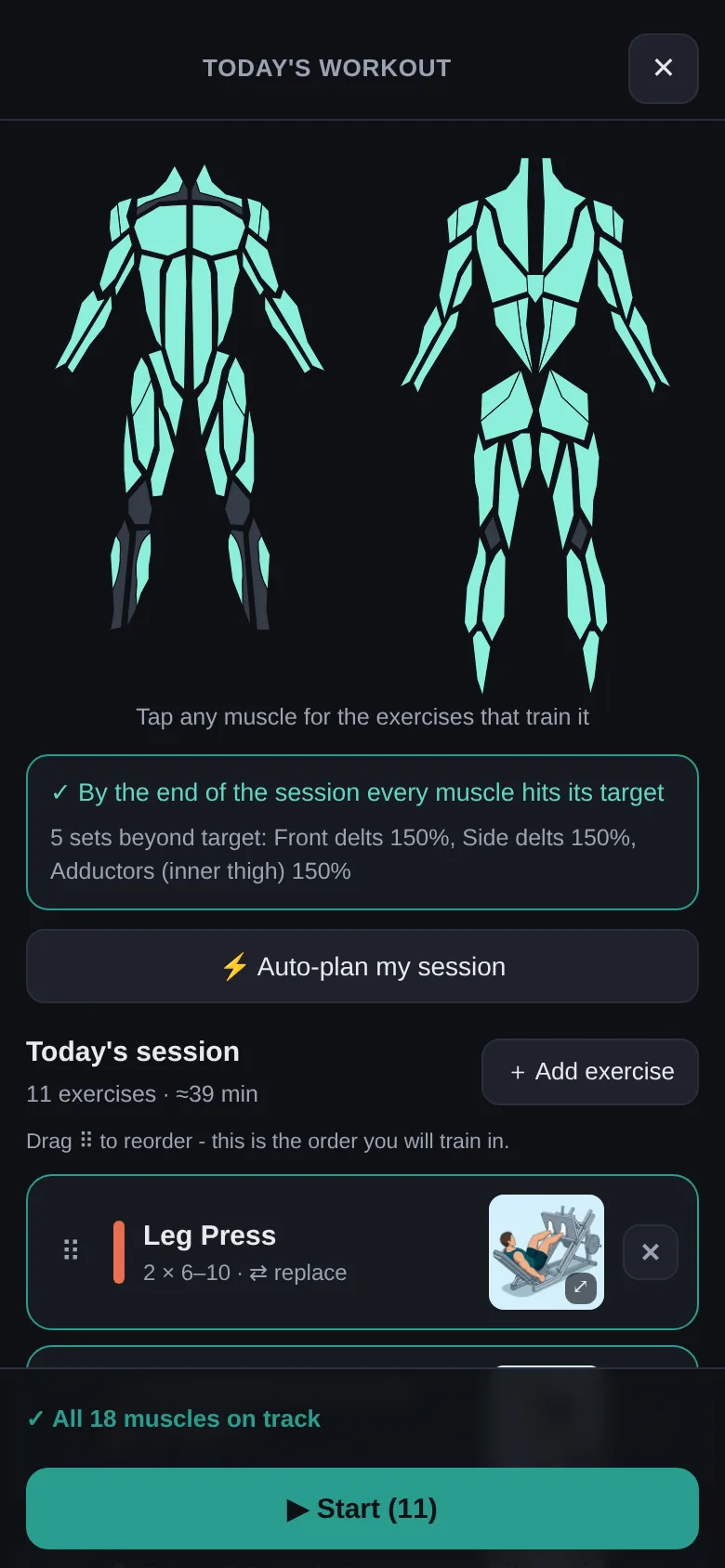
A compound-first, 11-exercise full-body routine built to load quads, hamstrings, chest, back, shoulders, arms and abs - all 18 groups - in one session.
Which Muscles Is Your Workout Missing?
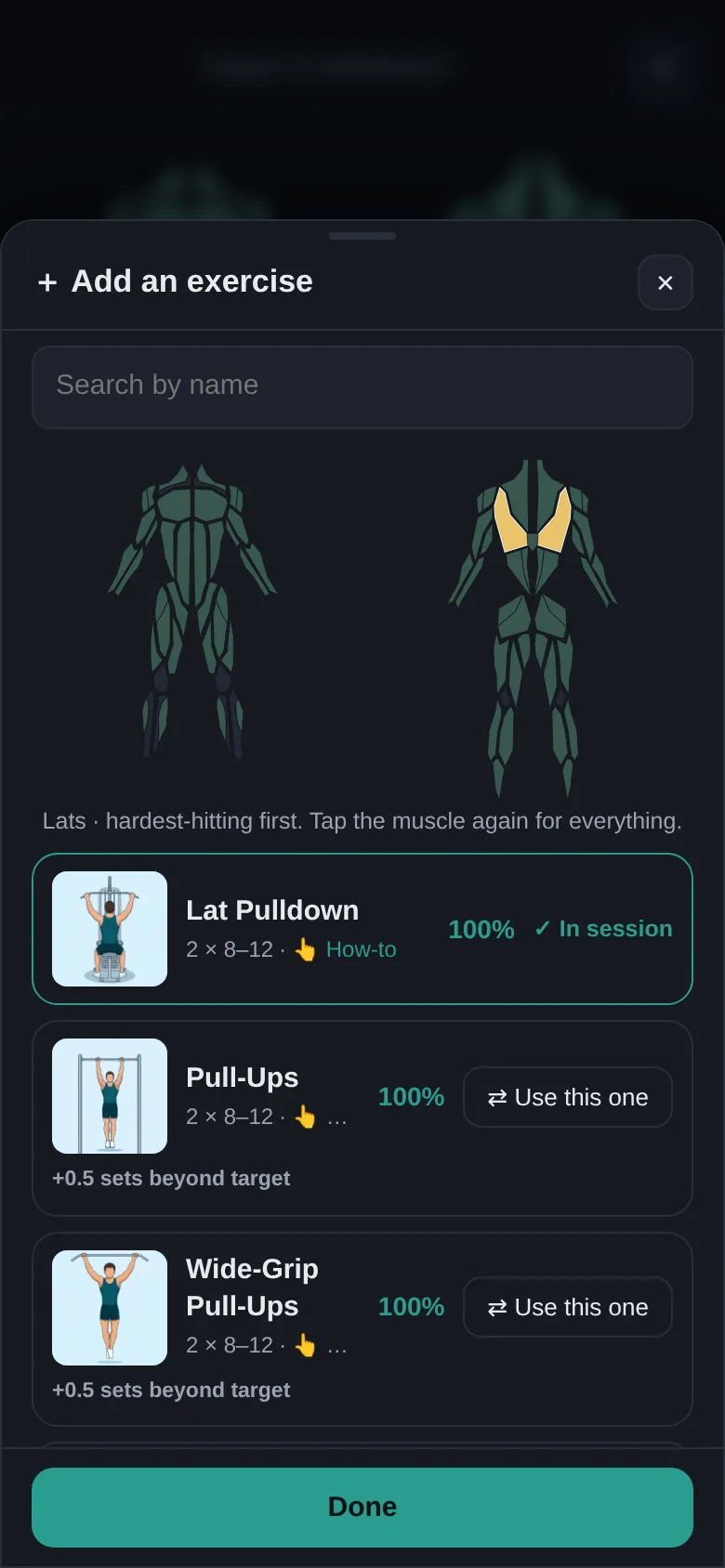
Most routines miss the same handful of muscle groups. Here they are, measured - with what a classic five-lift routine actually delivers to each one.
Full-Body Workout for a Crowded Gym
Peak-hour gym, every good station taken? Here’s how to still hit every muscle group in one session - without waiting or skipping anything.